Learn trading as a decision process
From market foundations to systematic execution, AURORA, SMC and quantitative research.
Start here
Pick the starting point closest to you. Each entry is a sequence of lessons in the order worth learning them.
New to trading
- What is a trend?
- What is a stop loss?
- What is ATR?
- What is R-Multiple?
- How do you size a position?
- Why wait for the bar to close before trusting a signal?
- Multi-timeframe context
I already trade
- What is the 1st BREAK?
- What is SUNNY?
- How do trading sessions affect signals?
- What does volume tell you, and what does it not?
- What goes into a trade plan?
- How do you read the statistics dashboard correctly?
I use AURORA Pro
- Entry Filter Profile: choosing how selective setups are
- Setup Quality: scoring each BREAK and SUNNY on its own
- Tier 3: traces of large money flow around a setup
- SMC RETEST: entering when price returns to the breakout's zone
- What is an SMC Sweep + MSS?
- What is an IFVG? When a price gap flips its role
- Strategy Validator: testing AURORA with costs and realistic fills
Learning paths
Ordered courses where each lesson leads to the next. Unpublished lessons keep their place so you can see the whole map.
Beginner to systematic trader
Build the decision foundation: trend, risk, sizing and how to measure results.
Master AURORA Standard
Understand each core setup, the trade plan and how to read statistics on your own chart.
Master AURORA Pro
Rule-based SMC, the quality layers and validating before you switch on a filter.
Trading research & validation
Read backtest numbers correctly and avoid fooling yourself with past results.
Classic technical indicators
What each indicator measures, when to use it, and its limits. No magic formulas.
Gold / Nasdaq intelligence
Macro context and large-player positioning for gold and Nasdaq. In preparation.
Explore by topic
Eight main topics. The gold dot marks lessons specific to AURORA products.
Trading Foundations
Trend, timeframes, bar close: the concepts every trading decision rests on.
3 publishedRisk & Position Sizing
Stop loss, R-Multiple, ATR and sizing so one losing trade never breaks the account.
5 publishedTrend & Market Structure
Swings, breakouts, liquidity and reading price structure with explicit rules.
1 publishedVolume, Sessions & Data
What volume does and does not tell you, trading sessions, and where each data series comes from.
4 publishedAURORA Standard
The core trend framework: 1st / 2nd Break, SUNNY, trade plan, Pullback Entry.
8 publishedAURORA Pro & SMC
Rule-based SMC, Setup Quality, Tier 3 and the Entry Filter Profile.
9 publishedResearch & Validation
Avg R, drawdown, sample size, IS / OOS, costs: how to know whether a system really works.
9 publishedQuant & Market Intelligence
Macro data, large-player positioning and using quantitative context in decisions.
No articles yetFeatured explainers
Every video has a permanent article page: summary, illustrations, chapters, transcript and concept links.
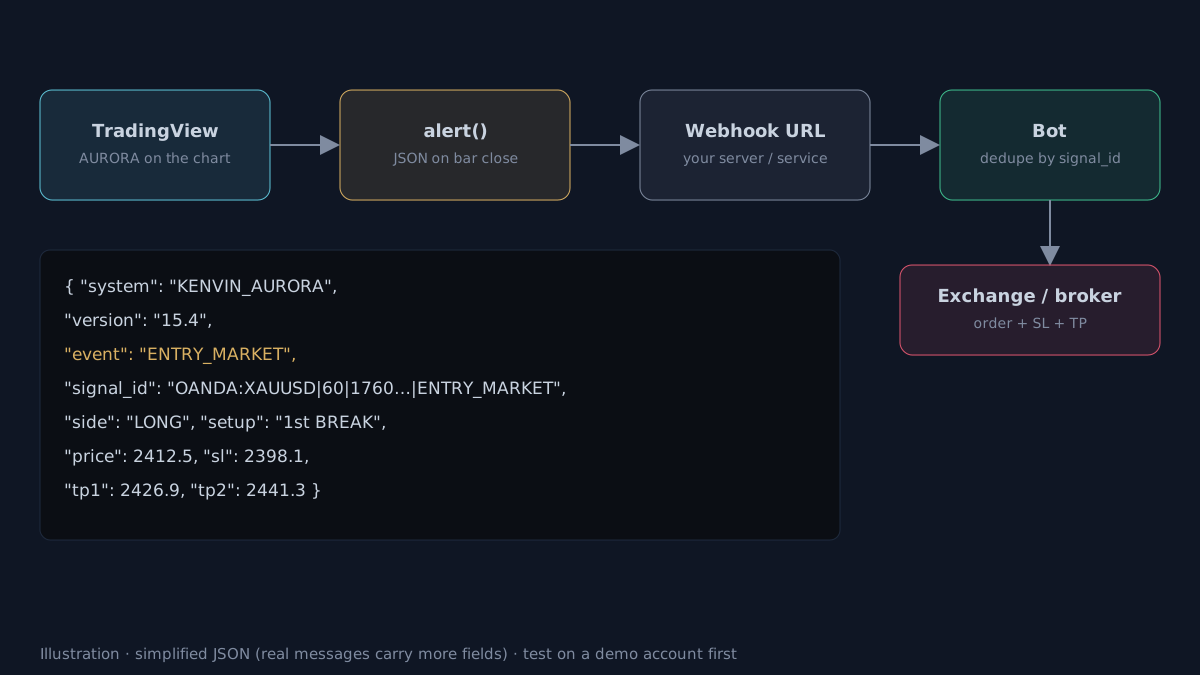
JSON alerts and webhooks: sending AURORA signals to a bot
AURORA has two kinds of alert: setup alerts for entering trades yourself, and JSON alerts sent by webhook so a bot can read the entry, stop, targets and de-duplication ID of each event.
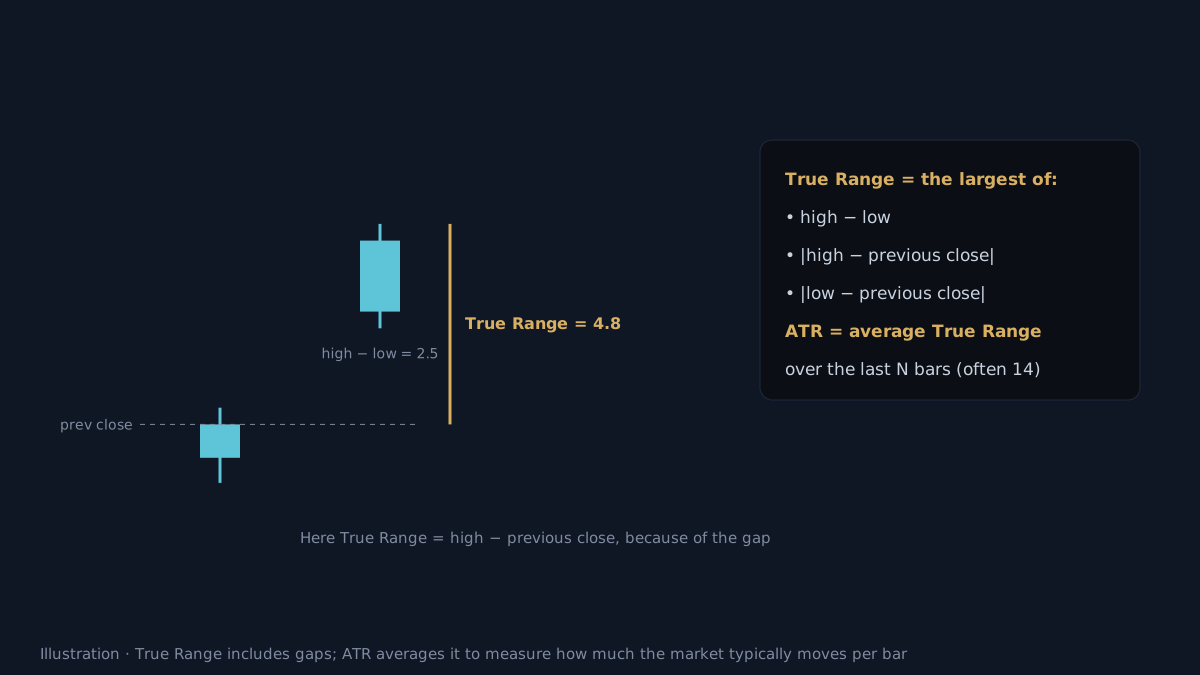
What is ATR?
ATR (Average True Range) is the average price range over the last N bars, used to measure volatility and set stop distances that fit the market.
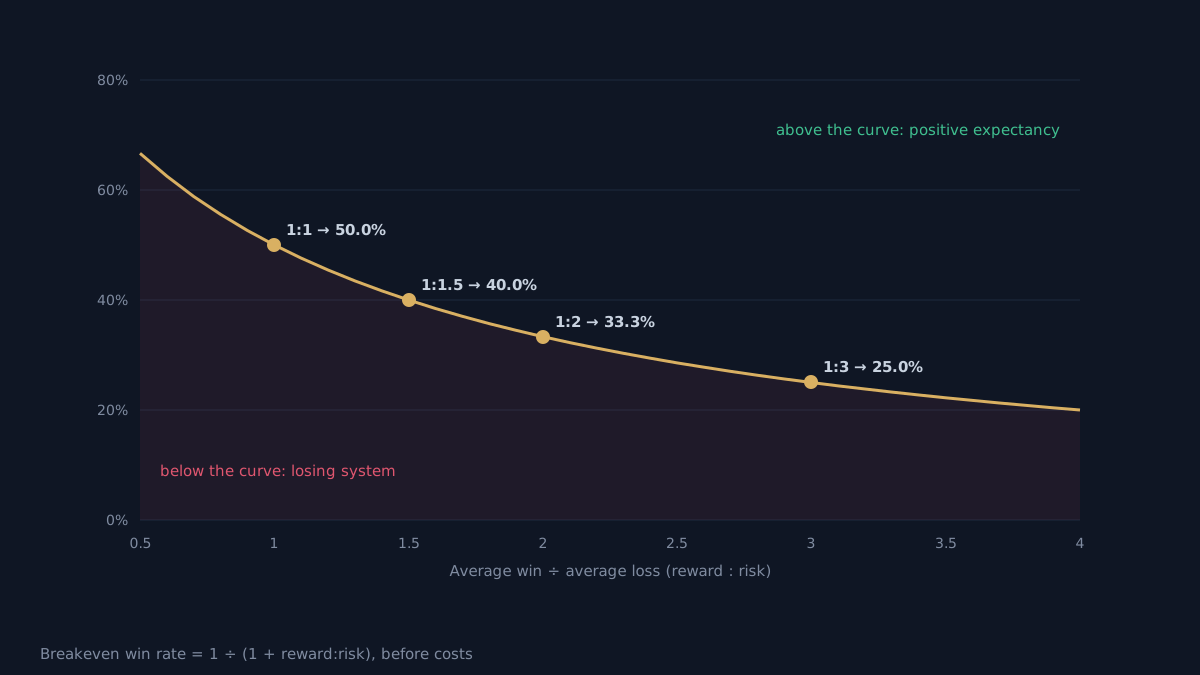
Win rate vs Avg R: which number matters more?
Win rate only means something alongside the average win and loss; average R per trade (expectancy) combines both and decides whether a system has an edge.
Trading glossary
59 terms, each linking to the full article and to how AURORA uses the concept where relevant.
- ATRAverage True Range
- The average price range over the last N bars. Used to measure volatility and to set stop distances that fit the market.
- R-Multiple
- A trade result expressed as a multiple of the initial risk. A full stop-out is −1R; a gain of twice the risk is +2R.
- F-SLFixed stop loss
- The fixed stop of a trade, set at entry by the setup rules. It is the basis for 1R and position size.
- RVOLRelative Volume
- Current volume compared with its normal level. Measuring against the same time of day removes session effects.
- SweepLiquidity sweep
- Price pierces an obvious high or low and then closes back inside, often after triggering resting orders around that level.
- MSSMarket Structure Shift
- Price closes beyond the latest high (or low) of the pullback, confirming momentum has returned in the expected direction.
- FVGFair Value Gap
- A price gap in a three-candle pattern where the wicks of candles one and three do not overlap, showing a fast one-sided move.
- OOSOut-of-sample
- Data not used when choosing parameters. OOS results show whether a configuration works beyond the data it was tuned on.
AURORA knowledge
Library articles explain why a concept matters. Product docs explain how to configure and run AURORA. The two link to each other but are kept separate.
AURORA Standard
The core trend framework.
- 1st / 2nd BREAK, SUNNY
- Trade plan, Pullback Entry
- Statistics dashboard, sessions, volume
AURORA Pro
The advanced setup framework.
- Rule-based SMC: RETEST, SWEEP + MSS, IFVG
- Setup Quality, Tier 3
- Entry Filter Profile, Strategy Validator
AURORA Elite
A future order-flow line for futures traders. In development, no release date yet.
Research & validation
A good-looking backtest number says little without sample size, costs and out-of-sample checks. This is how KenvinZone evaluates every system, AURORA included.
- Win rate vs Avg R: which number matters more?
- What is Profit Factor?
- What is drawdown?
- How many trades are enough to conclude anything?
- In-sample and out-of-sample
- Overfitting: when a system is only good at the past
- Commission and slippage: how a small edge disappears
- Filtered and ghost trades: measuring what a filter is really worth
- Strategy Validator: testing AURORA with costs and realistic fills
- Data provenance: knowing where your chart's numbers come from
An open library, with editorial review
Today every article is written and reviewed by KenvinZone. Later the library will accept contributions from invited trading researchers and educators, through technical and editorial review. It is not an open self-publishing platform.